
When Storm Damage Needs Immediate Attention
Emergency Storm Damage Repair in Corinth for exposed rooflines, interior water intrusion, and structural vulnerability after severe weather events
Corinth sits within a corridor of Denton County where residential development accelerated through the 1990s and early 2000s, producing a large concentration of single-family homes built with dimensional asphalt shingle systems over standard OSB decking. Those materials perform reliably under normal conditions, but storm damage — torn flashing, displaced ridge caps, punctured decking — leaves them immediately vulnerable to water intrusion that can spread from the attic cavity into insulation, ceiling drywall, and wall framing within hours. First Out Roofing, LLC provides emergency storm damage repair in Corinth for property owners dealing with active exposure after a storm has compromised their roof system. The work focuses on stopping water from entering the structure before secondary damage multiplies the scope and cost of full restoration.
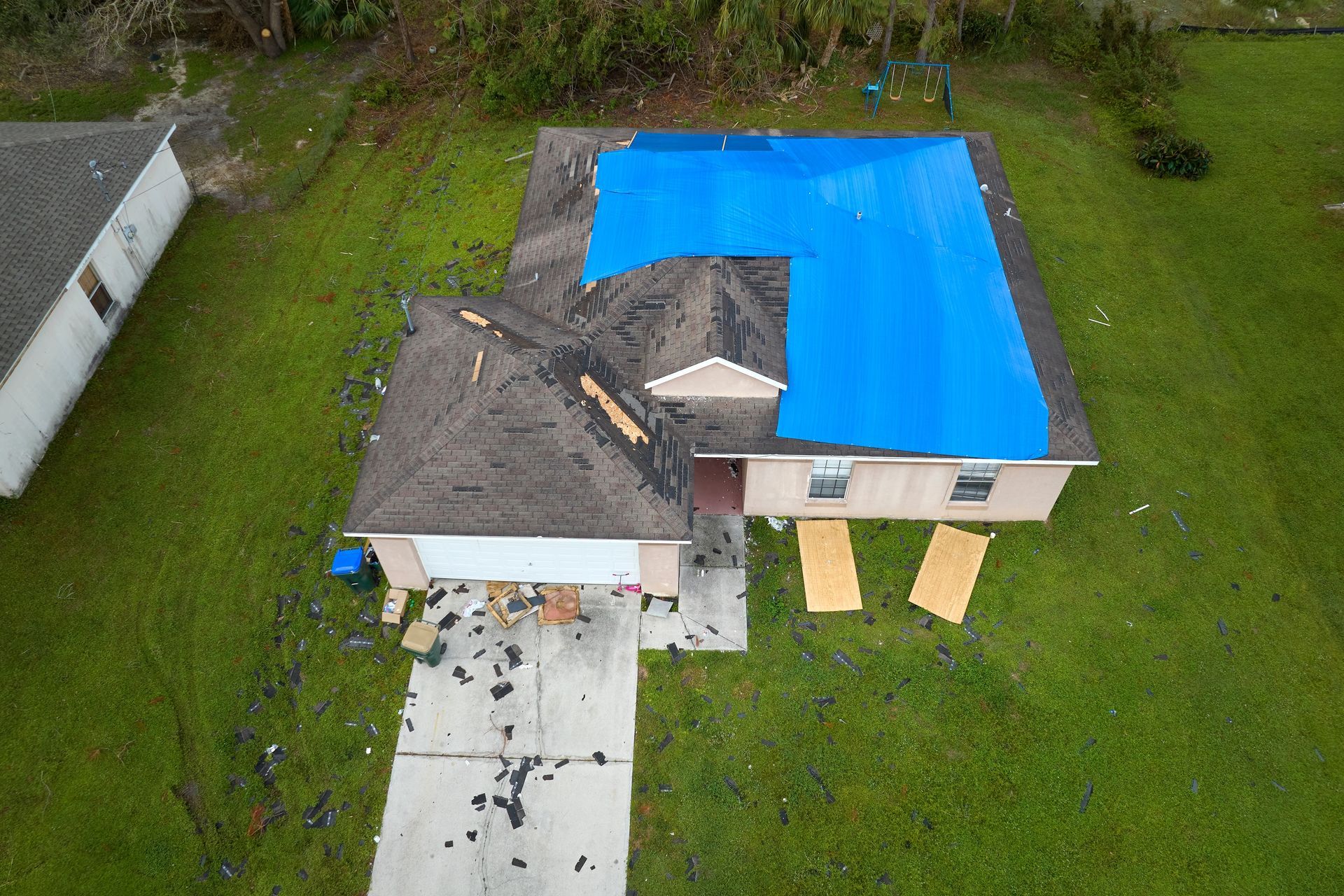
Emergency repair begins with a rapid roof assessment to identify every point of compromise — not just the obvious impact zones, but lifted flashing along valley intersections, cracked pipe collars, and ridge vent displacement that are easy to miss from ground level. First Out Roofing uses that assessment to sequence the emergency work: covering open decking with heavy-duty tarping, reseating or replacing displaced shingles, and resecuring flashing that has separated from parapet walls or chimney bases. Homes in the Lake Sharon Estates area, for example, often feature steeper-pitch rooflines and multi-ridge layouts that require specific anchoring techniques when applying temporary protection to prevent tarp failure under continuing wind.
Arrange an on-site assessment with First Out Roofing, LLC to identify every active exposure point on your roof before interior damage spreads further.
How Emergency Roof Repair Stops Progressive Damage
The sequence of emergency repair work matters as much as the materials used. Temporary protection — properly installed, not simply draped — requires the tarp to be anchored through the decking or weighted at the ridgeline so wind cannot get beneath the material and peel it back. First Out Roofing evaluates each breach point individually: a small shingle displacement may need only a reseat and reseal with roofing cement, while a torn section of decking requires rigid cover board beneath the tarp to prevent further deflection under foot traffic or debris load.
After emergency stabilization is complete, the visible difference is straightforward: no open decking, no water tracking down interior walls, no active dripping at ceiling fixtures. What matters beyond the visible is that the temporary protection is installed in a way that holds through subsequent storms rather than requiring a second emergency call two days later. The assessment documentation First Out Roofing provides also gives you a clear record of pre-repair conditions, which is necessary for insurance claim processing.
Emergency repair covers immediate stabilization — closing breaches, protecting decking, and reseating displaced components. It is distinct from full roof replacement or comprehensive restoration work, which follows once the insurance assessment is completed and permanent repair scope is defined. Understanding that distinction helps property owners set accurate expectations about what the emergency visit accomplishes and what follows.
Answers About How Emergency Storm Repair Works
Property owners dealing with active storm damage often have specific questions about what the repair process involves, particularly for homes with the multi-plane roof designs common in Corinth's residential neighborhoods.
What does an emergency roof assessment actually examine?
The assessment covers every elevation of the roof, not just the side facing the storm's direction. Hail and wind damage frequently appears on the downwind slope and at valley intersections where water concentrates, so a complete walkable inspection of all roof planes is standard before any repair work begins.
How is temporary tarp protection secured so it does not fail in subsequent wind?
Tarps are anchored using batten boards screwed through the tarp into the decking, or tied to sandbag weights at the ridge, depending on pitch and access. Simply draping a tarp without mechanical anchoring is a common shortcut that fails quickly and can cause additional surface damage when the tarp shifts.
When should emergency repair happen versus waiting for a full insurance inspection?
Emergency repair to stop active water entry should happen immediately — insurers expect property owners to mitigate further damage, and delay can result in claim complications. The emergency repair documentation, including photos of the breach before and after stabilization, supports rather than conflicts with the adjuster's later inspection.
Why does roof pitch affect how emergency repairs are approached on steeper homes?
Steeper-pitch roofs common in newer Corinth neighborhoods create different access and anchoring challenges. Ridge cap displacement on a 9:12 or 10:12 pitch requires specific fastening patterns to hold under load, and tarp anchoring on those slopes needs more attachment points than a low-slope application to prevent wind uplift at the edges.
What should you check inside the home while waiting for the emergency repair crew to arrive?
Identify any ceiling discoloration, bubbling paint, or active dripping, and place containers to catch standing water. Avoid cutting open ceiling drywall unless water is pooling above a fixture, as that assessment is better done after the roof breach is closed and the entry point is confirmed.
First Out Roofing, LLC is available for emergency calls on all holidays, so a storm event on a major holiday does not leave your property exposed while you wait for service to resume. Contact First Out Roofing, LLC directly to report your situation and get an emergency crew dispatched to your address.